National Defence
Symbol of the Government of Canada

1st Air Defence Regiment
(Lanark and Renfrew Scottish) RCA

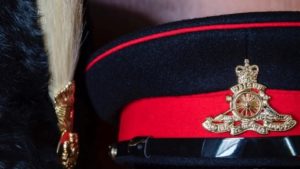
RCA BadgeThe Militia Act of 1855 authorized the formation of a number of volunteer militia companies in Canada. Six such companies were raised throughout the Lanark and Renfrew counties: Almonte - Dec 5, 1862; Brockville - Dec11, 1862; Perth - Jan 16, 1863; Fitzroy - Jan 16, 1863; Lansdowne - Jun 15, 1866; Smith Falls - Jun 22, 1866. On 5 Oct 1866 these independent companies were concentrated into one unit bearing the title of “42nd Brockville Battalion of Infantry”. In 1870 the Battalion sent one officer with the Red River Expedition which was sent to Manitoba to see action in the Northwest Rebellion. The Battalion also supplied 24 officers and 273 NCO’s and men to enlist “to serve Queen and Country” during the Fenian Raids. From 1871 until 1896 reduced funding severely curbed the training of militia. Nevertheless the battalion continued to excel at musketry and drill. On 1 Dec 1897 the battalion’s name was changed to “42nd Lanark and Renfrew Battalion of Infantry” and then on 8 May 1900 was once again re-designated as the “Lanark and Renfrew Regiment”.

In 1914, at the outbreak of World War I, the Lanark and Renfrew Regiment was one of many Canadian Regiments that hadn’t seen nor felt any wartime service against a foreign enemy. The peacetime officers and men would soon become part of the CEF. However soon was not good enough for some. Men from both Lanark and Renfrew counties, some who had served with the peacetime militia, became eager to fight and thus the Lanark and Renfrew Regiment helped contribute men with peacetime militia experience to the 2nd, the 13th, the 21st, the 38th, the 77th and the 80th Battalions. CEF LCol J.F. deHertel and 572 other officers and men were the first militia from the two counties to be mobilized as a unit. LCol deHertel CO of the 130th Lanark and Renfrew Overseas Battalion served in Northwest Europe until the end of the war. Towards the end of the war a second battalion was formed and sent into active service. LCol E.J. Watt and 374 officers and men were formed into the 240th Battalion CEF. By the end of the war the officers and men of the 130th and 240th Battalion had won seven major Battle Honours. The 130th took part in countless small skirmishes, battles and patrols until the end of the war. Whether in major battles or minor skirmishes, the officers and men served gallantly.

The regiment suffered a gradual decline along with the rest of the Canadian Army as Ottawa reduced spending over the years. The Regiment still managed to parade and train despite limited resources. On 15 July 1927, the regiment was designated as a highland infantry unit and once more renamed. The unit’s official title was now the “Lanark and Renfrew Scottish Regiment”. With the kilts and tartans came the twinning with its sister Regiment in the UK - the Black Watch. With a renewed sense of pride, the regiment continued to train until the flames of war swept over Europe once again.

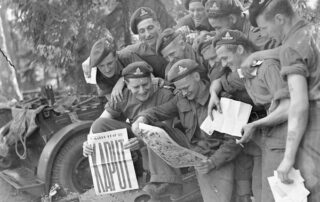
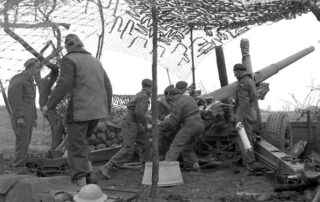
The 1st Battalion was mobilized for active duty on 5 May 1942 and was employed on home defence until disbanded on 15 Oct 1943. The Overseas Battalion designated as such on 12 Jul 1944 had been previously designated 1st LAA Regiment and was organized on 1 Feb 1941. It was composed of the 35th, 89th and 109th Light Anti-Aircraft Batteries. The regiment arrived in Augusta, Sicily on 8 Nov 1943 and proceeded to Messina where it remained until Jan 1944. It arrived at Reggin, Italy on 8 Jan 1944 and was re-organized as infantry and was re-designated “The Lanark and Renfrew Scottish Regiment”. The regiment served at San Guistina, the Rubicone, and Savio Rivers. The regiment participated in operations at Ortona, crossed the Naviglio Canal and secured the next one, — the Munio. There they had a stiff encounter with the enemy’s powerful machine guns and artillery, resulting in many casualties. As a component of the 12th Cdn Inf Bde, it participated in operations at San Guistina, the Ribicone and Savio Rivers. The regiment landed in France on 5 Mar 1945 and moved to Lozer, Belgium. It was re-designated 1st LAA Regiment and moved to Ostend, Belgium. In May of 1945 it moved into Holland. On VE Day the regiment was located in the area of Ede. Members of the regiment were returned to Canada later that summer. Total Battle Casualties during World War II were 530 of which 139 were fatal.


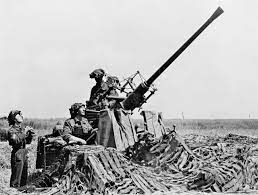
As a peacetime militia unit the Regiment was again re-designated as a LAA Unit. The 59th LAA Regiment (Lanark and Renfrew Scottish) continued to serve in its two Home Counties recruiting and training civilians as part-time soldiers and full time Canadians. During this time the 59th trained at Picton, Petawawa, Ottawa and various locations within the two counties. The main weapon used by the 59th was the 40mm AA gun. During thirteen years as Gunners, the 59th varied from RCA tradition by wearing a distinctive shoulder patch of Black Watch tartan in the shape of the Lanark and Renfrew Scottish Regiment’s old hat badge.

Yet another reorganization of the Militia was planned and implemented in 1959. Throughout the latter months of 1959 many units across Canada received orders which either disbanded Regiments totally, reduced them to zero strength or reorganized them. On 5 Oct 1966 the Lanark and Renfrew Scottish Regiment celebrated its 100th birthday. After months of individual company training and several weeks of collective Regimental training 500 all ranks marched to Centennial Park in Pembroke to receive its new Colours from the Governor-General, the Right Honorable George P. Vanier. The Centennial Year 1967 was a year for many celebrations throughout the country.

Once again the Regiment started to rebuild and recover from the loss of the old timers. Roles were changing again. Early in 1968 more cuts were announced that would again drastically hurt and almost kill the Regiment.

The Regimental Birthday of 1992 also saw the regiment becoming Anti-Aircraft (Air Defence) again. It’s new name was 1st Air Defence Regiment (Lanark and Renfrew Scottish), RCA. Two batteries were formed under our old numbers, 89th and 109th. The regiment was equipped with the Javelin SAM system. The unit also became a Total Force Unit that integrated both Reg F and Res F into the same unit. In the spring of 1994 the unit was detached from Ottawa District (now 33 CBG) to under command of the SSF (now 2 CMBG) in CFB Petawawa. New modern equipment is coming at a fast pace requiring extra buildings to store it all. Currently, the Regiment is an integral part of 2 Canadian Mechanized Brigade Group. As part of 2 CMBG, the regiment has had members serve in Bosnia as well as other UN/NATO operations, such as Rwanda and the Central African Republic. It has also participated in the Winnipeg flood and the Ontario Ice Storm relief efforts.

BATTLE HONOURS

World War I 1914 - 1918 and World War II 1939 - 1945
SOMME - 1916 CORIANO
ARRAS - 1917 MISANO RIDGE
AMIENS ITALY - 1944 - 1945
HINDENBERG LINE
PURSUIT TO MONS